Many yoga brand buyers and fitness enthusiasts wonder: What is EVA foaming process? How do manufacturers make yoga blocks? A yoga block is one of the most essential yoga accessories. But what makes a professional yoga brick different from ordinary rectangular blocks? Why use a dedicated yoga block instead of random household rectangular objects during yoga and Pilates training?
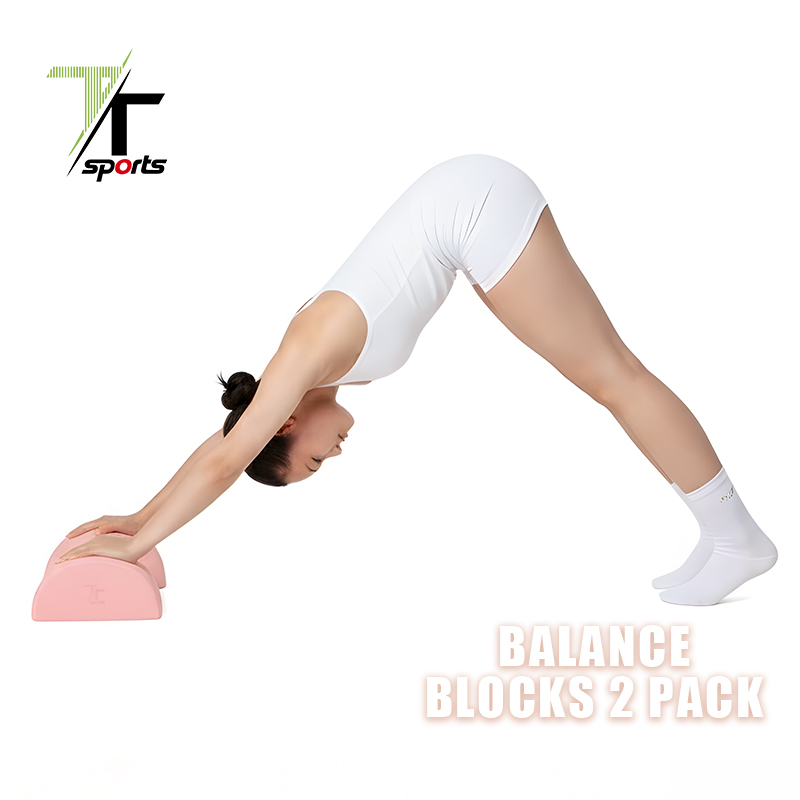
What Is EVA Foaming Process?
EVA foaming is a manufacturing method that creates lightweight closed-cell foam. Manufacturers blend EVA resin with blowing agents, cross-linking agents, fillers, pigments and other processing additives. Under controlled heat and pressure, the blowing agent releases gas. Meanwhile, EVA forms a stable cross-linked structure, creating countless tiny, uniform foam cells.
The mixture expands greatly in volume, similar to a marshmallow. After the foam cools and stabilizes, we chamfer the edges, print logos on demand, package and ship the finished yoga blocks.
What Affects The Performance Of EVA Yoga Blocks?
Expansion rate is a core parameter that determines yoga block performance.
- Higher expansion rate: lower density, lighter foam
- Lower expansion rate: denser, firmer foam
Expansion rate alone cannot decide product quality. The final performance also depends on material formulation, hardness, temperature control, pressure and foaming duration.
A good yoga block balances light weight and stable support.
- Low-density foam: lighter, easier to carry, but weaker compression resistance and easier to deform after long use.
- High-density foam: solid and stable. It works well for stretching, balance practice and posture alignment. Some users may find high-density foam stiff.
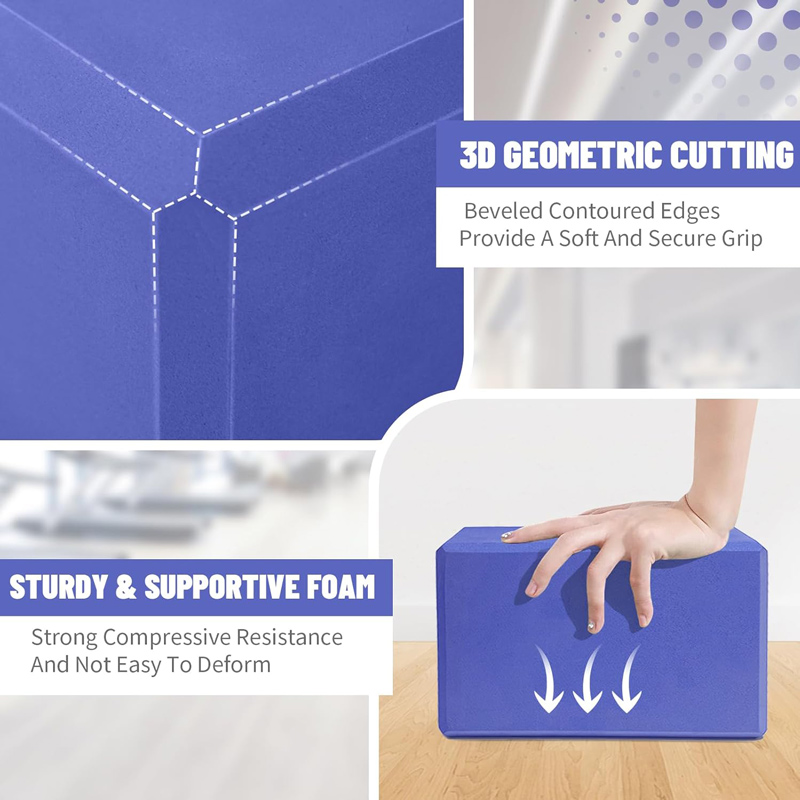
One-Stage Foaming vs Two-Stage Foaming For Yoga Blocks
Manufacturers choose one-stage or two-stage EVA foaming based on target density, expansion rate and product requirements.
What is one-stage foaming?
One-stage foaming completes cross-linking and foaming reactions within one single heating cycle. Raw materials are mixed and made into sheets. The sheet is heated and pressurized inside a mould. It expands to form foam, then cools and stabilizes.
What is two-stage foaming?
Two-stage foaming adds a second expansion step. EVA material goes through primary foaming to form an initial foam structure. Then it is heated again for controlled secondary expansion. Two-stage foaming offers more precise control over expansion rate, density and cell structure. It is widely used for high-expansion and low-density EVA foam.
Important note: One-stage / two-stage describes production methods. High or low expansion describes foam expansion level. Two-stage foaming does not always mean better quality. Higher expansion rate does not guarantee better yoga block performance. The best manufacturing process depends on use case, required firmness, product weight, durability and target price.
Yoga Block Quality & Customization For Wholesale Buyers
How to judge the quality of an EVA yoga block? Check these key specs: foam density, hardness, expansion rate, unit weight, compression resistance, dimensional stability, surface finish and cell uniformity.
Key point: Density and hardness are two separate metrics. Higher-density foam is not automatically harder.
- Dense stable EVA yoga blocks: ideal for professional yoga and Pilates. They deliver strong support and resist long-term compression.
- Lightweight low-density yoga blocks: perfect for travel yoga, beginner fitness kits, promotional gifts and markets with strict logistics cost control.
As a yoga block manufacturer, we offer full customization for fitness brands and bulk purchasers. Available custom options: size, density, hardness, color, surface texture, logo silk printing, laser engraving and packaging. Brands can select suitable foaming specifications to develop yoga blocks for different customer groups, balancing performance, cost and durability.
Looking for wholesale custom EVA yoga blocks? Contact us to get your quotation.
Frequently Asked Questions
What is EVA foaming for yoga blocks?
EVA foaming is a foam manufacturing process. EVA resin mixes with blowing agents, cross-linking agents and additives. With controlled heat and pressure, the material expands and forms closed-cell foam, which can be cut and processed into lightweight, supportive yoga blocks.
What is the difference between one-stage and two-stage foaming yoga blocks?
One-stage foaming finishes cross-linking and foaming in one heating cycle. Two-stage foaming adds a second expansion phase for finer density adjustment. Two-stage foaming does not equal higher quality yoga blocks.
Are yoga blocks with higher expansion rate better?
No. Higher expansion rate creates lighter, lower-density foam that deforms more easily. Lower expansion rate produces firmer blocks for professional training. The best choice depends on your target market and usage scenarios.
Can I customize logo, size and color on EVA yoga blocks for wholesale?
Yes. We support custom size, density, hardness, color, surface texture, silk print, laser engraving and packaging for bulk yoga block orders.